
Last updated on May 25, 2026
Poultry farming is one of the most accessible and profitable agricultural businesses you can start today. Whether you have a small backyard or a dedicated piece of land, raising chickens for eggs or meat can generate consistent monthly income with relatively low startup costs compared to other farming ventures.
This guide walks you through everything you need to know — from choosing your birds to selling your first batch — with real cost estimates and profit projections that will help you plan your business properly before you spend a single coin.
Why Poultry Farming Is One of the Best Businesses in 2026
Demand for chicken and eggs never slows down. Unlike many other food products, poultry is consumed daily across every income level. Restaurants, households, schools, hospitals, and catering companies all need a steady supply. This consistent demand means you will rarely struggle to find buyers once your farm is producing.


Beyond demand, poultry farming has a short production cycle. Broiler chickens are ready for market in just 6–8 weeks. Layer hens start producing eggs at around 18–20 weeks and can lay consistently for up to two years. This means your investment starts returning money relatively quickly compared to crop farming or cattle rearing.
Types of Poultry Farming — Which One Is Right for You?
1. Broiler Farming (Meat Production)
Broilers are chickens bred specifically for fast growth and meat production. They reach market weight of 2–3 kg within 6–8 weeks. This is the fastest return model — you cycle through batches every 2 months, meaning you can run 5–6 production cycles per year from the same housing space.
2. Layer Farming (Egg Production)
Layer hens are bred for egg production. A good layer breed will produce 280–320 eggs per year under proper management. Egg production provides a steady daily income rather than lump-sum sales, which makes cash flow more predictable and manageable for beginners.
3. Free-Range and Organic Farming
Free-range and organic chicken commands a premium price — often 30–60% more than conventionally raised birds. This model requires more land but lower feed costs, and it appeals to the growing market of health-conscious consumers willing to pay more for quality. If you have access to open land, this is worth considering from the start.


How Much Does It Cost to Start a Poultry Farm?
Startup costs vary depending on your scale, but here is a realistic breakdown for a small beginner farm of 200 birds:
| Item | Estimated Cost |
|---|---|
| Housing construction (basic structure) | $300 – $600 |
| 200 day-old chicks | $80 – $150 |
| Feeders and drinkers | $40 – $80 |
| Feed for 8 weeks (broilers) | $200 – $350 |
| Vaccines and medications | $30 – $60 |
| Bedding (wood shavings) | $20 – $40 |
| Miscellaneous | $50 – $100 |
| Total | $720 – $1,380 |
As your operation grows and you reinvest profits, costs per bird decrease significantly because fixed costs like housing are already paid for. Most experienced farmers report their cost per bird dropping by 25–40% from the second cycle onward.
Step 1 — Choose Your Breed Carefully
The breed you choose has a direct impact on your profits. For broilers, the most popular and efficient breeds globally are the Cobb 500 and Ross 308 — both known for fast growth and excellent feed conversion ratios. For layers, Isa Brown and Lohmann Brown are the top choices due to their high egg output and adaptability to different climates.
Always source your chicks from a reputable hatchery. Cheap chicks from unknown sources often carry disease, poor genetics, or wrong vaccination history — problems that can wipe out an entire flock within weeks. The extra cost of quality chicks pays for itself many times over.

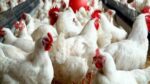 🐓 Fast Growth Guide: How to Make ₦500,000 Monthly from Poultry Farming in Nigeria (The Exact Number of Chickens You Need!) →
Step 2 — Set Up Proper Housing
Your poultry house does not need to be expensive, but it must meet four requirements: ventilation, security from predators, protection from rain and extreme temperatures, and ease of cleaning.
The standard recommendation is 0.1 square metres per bird for intensive broiler farming, or 0.2 square metres per bird for layers in cage-free housing. Overcrowding is one of the most common and costly mistakes beginners make — it causes stress, increased disease transmission, and poor growth rates.
Orient your house east-to-west so the long walls face north and south. This maximises ventilation while minimising direct sunlight into the house during the hottest parts of the day.
Step 3 — Source Quality Chicks and Feed
Visit your chosen hatchery before buying. A reputable hatchery will show you their parent stock, vaccination records, and biosecurity measures. They should provide a health guarantee and replacement policy for chicks that die within the first 48 hours.


Feed accounts for 65–75% of your total production cost, so this is where your attention will deliver the biggest savings. Use a properly formulated starter feed (high protein, 20–22%) for the first two weeks, then transition to grower feed, and finally finisher feed in the last two weeks before slaughter for broilers.
Step 4 — Vaccination and Disease Prevention
Disease is the number one killer of small poultry farms. A single outbreak of Newcastle Disease or Gumboro Disease can kill your entire flock in days. Prevention is far cheaper than treatment.
The core vaccination schedule for broilers includes:
- Day 1: Marek’s Disease vaccine (usually done at hatchery)
- Day 7–10: Gumboro (IBD) vaccine — eye drop or drinking water
- Day 14–18: Newcastle Disease vaccine
- Day 21–24: Second Gumboro dose
Beyond vaccination, practice strict biosecurity. Limit visitors to your farm. Always change footwear before entering the poultry house. Keep your water and feed equipment clean. Remove dead birds immediately and dispose of them properly.


Step 5 — Record Keeping
Successful poultry farmers track everything: daily feed consumption, water intake, mortality rate, weight gain, medication given, and costs. These records tell you exactly where your money is going and alert you early when something is wrong — for example, if daily feed consumption drops suddenly, that is an early warning sign of disease before visible symptoms appear.
A simple notebook or spreadsheet works fine when you are starting out. Record the date, number of birds, feed consumed, deaths, and any treatments given every single day.
Step 6 — Marketing and Selling Your Produce
Start building your market before your birds are ready. This is a mistake most beginners make — waiting until slaughter day to think about buyers. By then, you are under pressure to sell quickly and will accept low prices.
The best markets for poultry products include local restaurants and hotels, market traders and butchers, direct consumers through social media and WhatsApp groups, and supermarkets for larger operations. Eggs can also be sold directly to households on a subscription model — a reliable recurring income stream.


Price your product based on the current market rate in your area, your production cost, and a minimum 20–25% profit margin. Never sell below cost price even under pressure — it destroys your business long-term.
How Much Profit Can You Expect?
Using a 200-bird broiler farm as an example:
| Item | Amount |
|---|---|
| Revenue (200 birds × 2.5kg × market price $2/kg) | $1,000 |
| Total production cost | $720 – $850 |
| Net profit per cycle | $150 – $280 |
| Cycles per year | 5–6 |
| Annual profit (200 birds) | $750 – $1,680 |
Scale to 500 birds and your annual profit becomes $1,875 – $4,200. At 1,000 birds, experienced farmers report consistent annual profits of $4,000 – $9,000 from broilers alone. These figures improve further if you process and package your own birds rather than selling live.
Common Mistakes Beginners Make
Starting too big: It is tempting to start with 1,000 birds when you have never farmed before. Start with 100–200 birds, learn the management, make your mistakes at small scale, then expand when you are confident.


Skipping vaccinations to save money: One disease outbreak will cost more than all the vaccines you skipped combined. Never compromise on this.
Poor ventilation: Ammonia buildup from droppings is a silent killer. If you can smell it strongly when you enter the house, your birds are suffering and growth rates are dropping.
No emergency fund: Always keep cash reserved for emergencies — disease treatment, unexpected mortality, or equipment failure. A general rule is to keep 15–20% of your production budget as emergency reserve.
Is Poultry Farming Worth Starting in 2026?
Yes — but only if you approach it as a business, not a hobby. The farms that fail are run by people who do not keep records, cut corners on feed and vaccines, and have no market plan before they start. The farms that succeed treat every bird as an asset and every cost as an investment to be tracked and managed.


With the right breed, proper housing, consistent feeding, and a clear market lined up before you start, a 200-bird poultry farm can pay for itself within the first two production cycles and generate growing monthly income from there. That is a stronger return than most other small businesses available at the same startup cost.
Start small, learn well, and scale fast. That is the formula that works.

